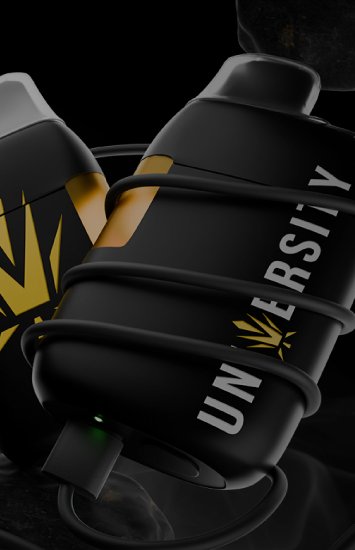
CB9, or cannabiorcol, is one of the latest cannabinoids drawing attention in the cannabis world. It’s a rare or lab-synthesized cannabinoid, not naturally abundant in hemp or marijuana plants. Like HHC or THCP, it is typically converted from hemp-derived CBD through lab-based isomerization processes.
Because CB9 is new, there is no peer-reviewed research available yet. Most of what we know comes from early user feedback and emerging product formulations that include it alongside other cannabinoids.
This content is for informational purposes only and does not constitute medical or legal advice. Please consult a healthcare provider before using cannabis products.
What Is CBD?
CBD, or cannabidiol, is a well-established non-psychoactive cannabinoid found in both hemp and cannabis. It’s the most studied cannabinoid after THC and is used widely in oils, capsules, gummies, and topicals.
CBD interacts with the endocannabinoid system (ECS) without binding directly to CB1 receptors (those responsible for intoxication). Instead, it modulates other receptors like 5-HT1A (linked to serotonin), TRPV1 (pain regulation), and more.
It’s also federally legal when derived from hemp and sold according to the 2018 Farm Bill.
If you’re always on the go, our pre-rolled options make it easy. Start with our full range of Prerolls.
🤔 CB9 vs CBD: Key Differences
Feature
CB9
CBD
Psychoactive?
Mild (user-reported)
Non-psychoactive
Legal Status
Gray area; not banned federally
Federally legal under 2018 Farm Bill
Research Backing
None
Extensive clinical research
Effects
Mild euphoria, clarity (anecdotal)
Relaxation, anti-anxiety (studied)
Product Forms
Rare: vapes, distillate
Widespread: oils, gummies, topicals
Note: CB9 effects are speculative and based on limited anecdotal evidence. CBD effects are supported by peer-reviewed studies.
🚀 CB9 Effects: What Users Report
Since CB9 hasn’t been formally studied, reported effects should be considered anecdotal and not clinically validated. Early adopters describe CB9 as:
Slightly euphoric, without the intensity of THC
Providing mental clarity
Potentially useful in full-spectrum blends for a balanced effect
Some theorize CB9 might act as a partial agonist or modulator at certain ECS receptors, but no scientific proof exists. These descriptions come from preliminary feedback on products like CB9-infused vapes or blends with Delta 8 and THCP.
These effects are not confirmed by clinical trials and should be approached with caution.
If you’re after classic, reliable potency, go with our THC Vapes.
🔹 CBD Effects: What Science Says
CBD has been studied for its potential to relieve anxiety, reduce inflammation, and improve sleep, among other uses. According to Project CBD and the Journal of Cannabis Research, CBD may help modulate:
Mood: By interacting with serotonin receptors
Pain: Through TRPV1 receptor pathways
Neuroprotection: Early research in epilepsy treatment has led to FDA approval for specific formulations
Unlike CB9, CBD is non-intoxicating, making it ideal for daytime or wellness use.
If you’re curious about what’s officially known about cannabis effects on health, the CDC shares up-to-date data and research summaries.
🌿 CB9 vs CBD: Product Availability
🌟 CB9 Products (Rare)
Binoid CB9 Vapes (with Delta 8/THCP)
Vivimu CB9 Distillate (DIY blends)
3Chi Cannabinoid Mixes (CB9 + Delta 10)
🙌 CBD Products (Mainstream)
CBD Gummies and Oil Tinctures
CBD Topicals and Bath Bombs
Full-Spectrum Hemp Extracts
You’re more likely to find CBD in regulated retail channels, while CB9 is usually in experimental products or limited-release vapes.
You’re experienced with cannabinoids and want to try something new
You’re curious about rare or emerging compounds
You enjoy experimenting with full-spectrum effects
Choose CBD if:
You want a non-intoxicating, proven supplement
You’re using cannabis for general wellness
You’re new to cannabinoids and want a safer entry point
🔬 The Science of Minor Cannabinoids: Why CB9 Matters for Research
While CBD has been extensively studied, cannabinoids like CB9 represent the next frontier in cannabis science. Known as “minor cannabinoids,” these compounds exist in much smaller quantities in the plant, or are synthetically produced from hemp-derived cannabinoids.
CB9, despite its lack of research, could help scientists better understand:
Receptor diversity in the endocannabinoid system (ECS)
Cannabinoid conversion pathways (e.g., how CBD transforms into CB9)
Entourage effects—how cannabinoids enhance or buffer each other
The Journal of Cannabis Research has repeatedly stressed the need for studies on minor cannabinoids, citing that their unique molecular structures may hold therapeutic potential not seen in THC or CBD. For example, some believe CB9 may interact with non-cannabinoid receptors, like TRP channels or serotonin systems, though this remains speculative.
CB9 also poses an interesting regulatory challenge. If future studies confirm any physiological effects, will it be categorized like THC, CBD, or something entirely new?
Bottom line: While CB9 is still under the radar, its role in the cannabinoid universe could become much more significant in the next few years.
💡 CB9 in Formulations: Why Brands Are Experimenting with Rare Cannabinoids
As cannabis brands look for a competitive edge, many are shifting toward custom cannabinoid profiles—formulas that go beyond THC and CBD to include emerging players like CB9, THCV, or CBG. CB9 is being explored not only for its mild psychoactivity but for how it modulates the overall experience.
Here’s why brands are giving CB9 a chance:
User demand for novelty: More experienced users want something new, something different.
Differentiation in saturated markets: A vape that includes CB9, for example, sounds more innovative than one that only contains Delta 8 or THC.
Potential synergy: When blended with CBD or THCA, CB9 may contribute to more balanced, full-spectrum effects (though more evidence is needed).
Trap University and other industry leaders are already curating vape blends and concentrates that include these rare compounds. And while CB9 is still not widely available, early inclusion signals its potential to grow within the market.
🧘♀️ Consumer Profiles: Who’s Choosing CB9 vs. Who’s Choosing CBD
Not every cannabinoid fits every consumer. So, who’s turning to CB9—and who sticks with CBD?
📈 CB9 Users:
Typically more experienced with cannabis
Interested in trying new blends or rare effects
Often seeking a mild buzz without full intoxication
Likely to shop for vape carts, distillates, or multi-cannabinoid formulations
These users might already be fans of THCP, Delta 8, or HHC and are looking for cutting-edge cannabinoid experiences. They may also be more familiar with lab testing, terpene blends, and personalized effects.
🧘 CBD Users:
Often new to cannabis or avoiding THC completely
Prioritize wellness, anxiety relief, or better sleep
Prefer capsules, oils, or edibles with consistent dosing
Less likely to experiment with rare cannabinoids
This group tends to look for research-backed, daily-use products that integrate into a healthy lifestyle.
Understanding your consumer profile is essential before choosing a product. And regardless of where you land, always opt for lab-tested, legal formulations from reputable sources.
If you’re interested in recent U.S. university conference findings on cannabis and hemp, the ICR conference page offers downloadable presentations and proceedings.
Not classified as illegal federally, but not explicitly protected either
Some states may restrict lab-created or synthetic cannabinoids
Always check your local laws before purchasing or consuming CB9 or CBD products.
This content is intended for audiences 21 years and older, as required by U.S. law.
People Also Ask (PAA)
Is CB9 stronger than CBD?
In terms of psychoactivity, yes. CB9 appears to offer a mild euphoria, unlike CBD.
Can you use CB9 and CBD together?
Some products combine them for a synergistic effect, though user feedback varies.
Are CB9 effects verified?
No. All CB9 effects are user-reported and not yet validated by scientific studies.
Is CBD better for wellness?
Generally yes. CBD is studied for stress relief, pain, and anxiety, with far more scientific backing.
Will CB9 get you high?
Not like THC, but some users report a mild head buzz or clarity.
🤝 Final Thoughts: CB9 vs CBD
CB9 and CBD offer two very different experiences. One is experimental and largely unexplored (CB9), while the other is a wellness staple with years of research (CBD).
Whether you’re looking for novelty or stability, your cannabinoid choice should be based on your goals, experience level, and local legality.
Stay informed. Stay safe. And as always, choose lab-tested products from trusted brands.
This content is for informational purposes only and does not constitute medical or legal advice. Always consult a healthcare provider before starting any new cannabinoid regimen.
Age Notice: This content is intended for audiences 21 years and older, as required by U.S. law.
With the rise of cannabinoids like CBD, CBG, and THCA, cannabis science is now expanding into lesser-known compounds—including CB9. As curiosity grows...
CB9, also known as Cannabiorcol, is the latest cannabinoid making waves in the hemp industry. With users reporting mild effects and brands experimenti...
Delta 9 THC is the powerhouse behind cannabis’s psychoactive effects, and at Trap University, we’re raising the bar with a lineup of Delta 9 THC vapes...