Understanding THCA vs THC: What Makes Them Different
If you have ever held a nug and wondered what makes it potent or what determines whether it is legal, you are really thinking about THCA vs THC. These two compounds are often mentioned together, but they behave very differently inside your body and under current laws.
At Trap University, we focus on breaking things down in a way that actually helps you in real life. In this guide, we explain everything you need to know about THCA vs THC, including how their chemical structures differ, how each one affects you, their legal status, and how they appear in the products you use every day.
🧪 First Up: What Is THCA?
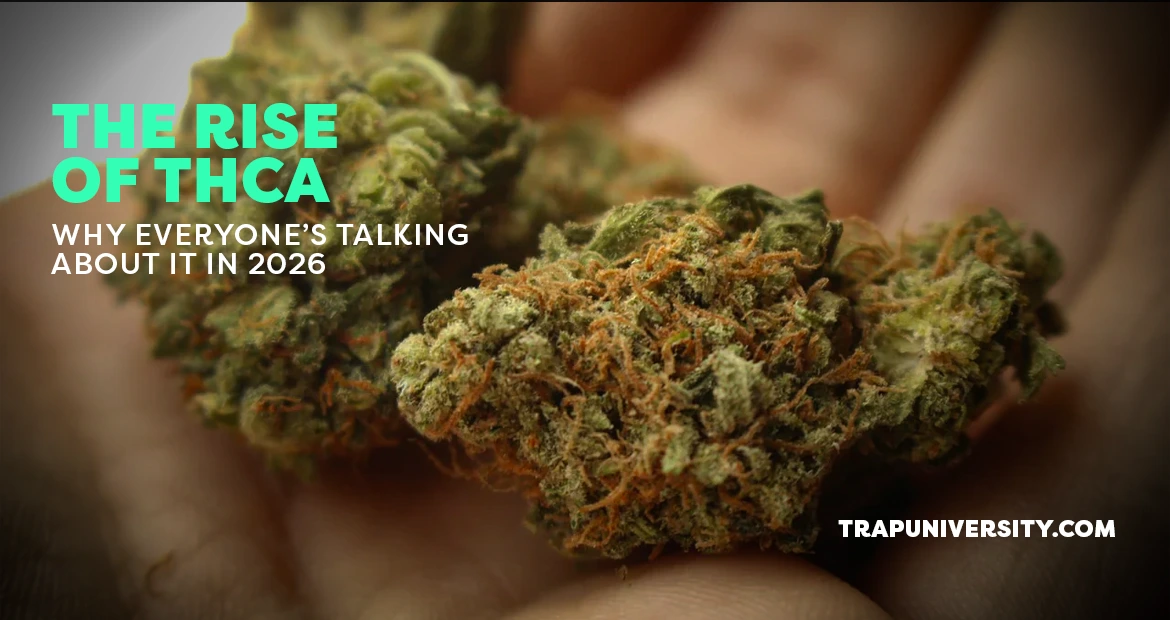
THCA (tetrahydrocannabinolic acid) is the non-psychoactive precursor to THC. It’s what you’ll find in freshly harvested cannabis before it’s been heated. That means your raw flower, live rosin, and pre-decarbed extracts are likely loaded with THCA.
This compound may not get you high on its own, but once heated—via smoking, vaping, or cooking—it transforms into THC through a process called decarboxylation. That’s when the fun (or function) begins. If you’re curious to explore THCA-rich options, you can browse legal smokeable THCA flower, or dive into THCA concentrates like diamonds and live rosin.
🤯 Then What’s THC?
THC (delta-9-tetrahydrocannabinol) is the psychoactive cannabinoid that most users associate with cannabis effects. It’s what causes the euphoria, couch lock, munchies, or creative bursts we’ve all come to recognize. THC is what happens after THCA gets activated.
While THCA may dominate the lab results of raw flower, it’s the THC percentage that counts when discussing potency post-consumption. Whether in edibles like THC gummies, vape cartridges, or THC pre-rolls, THC is the endgame for most recreational and many therapeutic users.
📊 Chemical Breakdown
Both THCA and THC have nearly identical molecular formulas, but one big difference: a carboxylic acid group present in THCA. This small tweak prevents THCA from binding effectively to the body’s CB1 receptors—the ones responsible for intoxication.
Compound
Psychoactive?
Needs Activation?
Commonly Found In
THCA
No
Yes (via heat)
Raw flower, rosin
THC
Yes
No (already active)
Edibles, vapes, oils
Understanding this chemical distinction is key to grasping the difference between THCA and THC.
🌐 Legal Gray Zones
Here’s where things get spicy.
Under the 2018 Farm Bill, THCA is technically legal as long as the product contains less than 0.3% Delta 9 THC by dry weight. That’s why THCA flower can be sold online—even though it becomes THC when smoked.
THC, on the other hand, is still federally illegal and only permitted in states with regulated medical or recreational programs.
This legal nuance has made THCA flower a go-to option for users in non-legal states looking for a Delta 9-like experience without crossing legal lines. But beware: once combusted, you’re essentially consuming THC.
💡 Medical Research and Future Potential
Scientific studies into THCA are still developing, but preliminary findings suggest it may interact differently with the body’s endocannabinoid system than THC. Some researchers are examining THCA for its potential to engage with peripheral receptors without central nervous system intoxication.
Meanwhile, THC remains the most widely studied cannabinoid for medical use, especially in contexts like chemotherapy-related nausea and appetite loss. As cannabis research expands, expect both cannabinoids to play distinct roles in therapeutic applications.
🛒 Market Trends and Consumer Preferences
One reason THCA has exploded in popularity is due to compliance with hemp laws and its potential to replicate a Delta 9 experience. More consumers are opting for THCA flower and vape carts that remain Farm Bill-compliant.
Conversely, THC products are more dominant in mature, regulated markets where consumers seek the reliability and convenience of gummies, pre-rolls, and disposables.
Understanding these trends helps users choose the cannabinoid experience that aligns best with their state’s laws and their personal lifestyle.
🔔 Will THCA or THC Show Up on a Drug Test?
Short answer? Yes.
Most drug tests don’t look for THCA directly. Instead, they detect THC metabolites like THC-COOH that your body produces after metabolizing THC.
If you’ve smoked THCA flower, taken dabs, or vaped THCA extract, your body has converted that THCA into THC—making a positive test result likely. This is a major factor when weighing the difference between THCA and THC, especially for users under employment or legal restrictions.
🚀 Which One Hits Harder?
Potency-wise, THC is the active player. THCA on its own won’t cause a high unless activated.
But here’s the kicker: many THCA products (like diamonds and live rosin) contain very high concentrations of THCA, which means once heated, they deliver powerful effects. So if you’re comparing effects after decarboxylation, THCA-rich products can hit just as hard—if not harder—than standard THC extracts.
So when we ask about the difference between THCA and THC, the use case and product format matter a lot.
🎓 FAQs: Difference Between THCA and THC
Q: Is THCA legal in all 50 states? A: No. While it’s federally legal under the Farm Bill, some states have cracked down on THCA-rich products.
Q: Can I get high from THCA? A: Only if it’s heated. Raw THCA will not cause intoxication.
Q: Is there any reason to choose THCA over THC? A: Yes. THCA allows more control over activation, and in some cases, better legal access.
Q: Does THCA have wellness benefits? A: Early research suggests it may, but more clinical data is needed. Always consult a licensed healthcare provider.
Q: Is the high from THCA flower different than THC flower? A: Not really—once activated, THCA becomes THC. The difference is in how it’s labeled and sold.
📆 Final Thoughts: Know the Difference
When it comes to the difference between THCA and THC, it’s less about which is “better” and more about how and where you plan to use cannabis.
If you want flexibility, legality, and potent options, THCA is your friend—especially in flower or concentrate form.
If you’re in a legal state and want a ready-to-go experience, THC delivers direct, predictable results with vapes, pre-rolls, or gummies.
Either way, know what you’re getting—and make sure you’re sourcing from compliant brands like Trap University, where education and high standards always come first.
This content is for informational purposes only and does not constitute medical or legal advice. Please consult a licensed healthcare provider before using cannabis products. Comply with your state’s regulations.
This content is intended for audiences 21 years and older, as required by U.S. law.
Cannabis regulations vary by state. Please verify the legal status of products in your area before purchase.
Search interest around THCA Vapes Explained content has exploded over the past year because more users want cannabis experiences that feel cleaner, sm...
Over the last few years, a new compound has taken center stage in the hemp industry. Conversations among consumers, retailers, and researchers increas...
When comparing THCA prerolls vs THC prerolls, most people assume they’re basically the same thing. They look identical. They smell similar. They burn ...
You’ve probably seen Delta 9, Delta 8, THCA, THCP, and more pop up on vape carts, gummies, and labels. But if Delta 9 is THC… then what’s all this tal...
With the rise of THCA-rich products like vapes, dabs, and hemp-derived flower, many users are wondering: Does THCA show up on a drug test? The short a...
In the ever-expanding world of cannabis science, two cannabinoids are generating serious buzz: THCP and THCA. Whether you’re a seasoned user or just s...
If you’re exploring premium cannabis extracts, you’ve likely come across THCA live rosin. But a common question still lingers: does THCA live rosin ge...
As cannabis science advances, more consumers are asking nuanced questions about cannabinoids. A top inquiry? THCA vs THC: which is stronger? It’s a fa...
Is THC Legal in My State? The cannabis landscape is constantly evolving, and in 2025, staying informed about THC laws in your area is more important t...
 Memorial Day Stock Up Sale | Up To 30% OFF + Free Shipping $75+ | Code: MEMORIAL