What Is the History of 4/20?
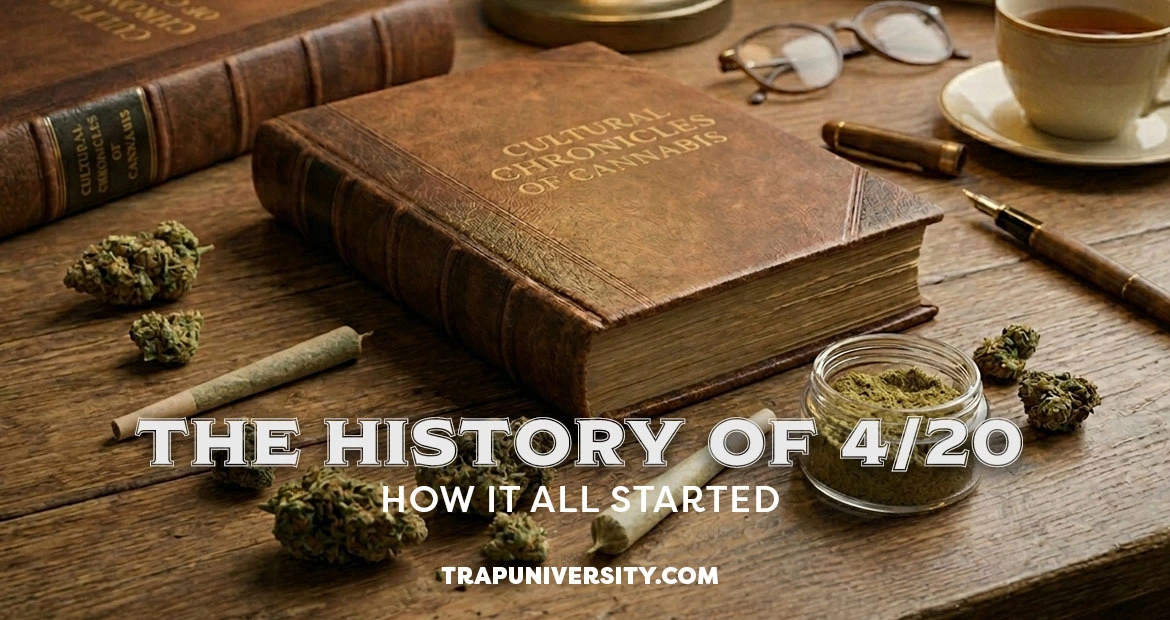
The history of 4/20 traces back to the early 1970s when a group of California students used “420” as a code for meeting after school. Over time, the term spread through music, media, and community networks, eventually becoming a global symbol for celebration on April 20th.
Every year, millions of people recognize 4/20 as the unofficial holiday of cannabis culture. But the history of 4/20 is deeper—and way more interesting—than most people realize.
What began as a private code between friends evolved into a worldwide ritual that now influences lifestyle, retail trends, and community identity. The story of 4/20 is really the story of how culture spreads.
The Origin Story: The Waldos
The true history of 4/20 begins in San Rafael, California, in the early 1970s.
A group of students—later known as “The Waldos”—used “420” as a code to meet at 4:20 PM to search for an abandoned crop they had heard about.
They never found it.
But they did create something bigger: a code that would outlive the mission.
How 420 Spread (And Didn’t Die)
The reason 420 survived wasn’t luck—it was network effect.
The Waldos had connections to people in the orbit of the Grateful Dead. As the term moved through concerts and touring culture, it spread organically.
By the 1990s, publications like High Times began referencing it, helping push it into mainstream awareness.
At the same time, early internet forums accelerated its reach.
When 420 Became 4/20 (The Date)
Originally, “420” referred to a time of day, not a date.
But as the phrase spread, people began associating it with April 20 (4/20), turning a moment into an annual ritual.
This shift is what transformed 420 from slang into a cultural event.
Timeline: How 4/20 Evolved
- 1970s → Code used by a small group
- 1980s → Spread through underground scenes
- 1990s → Media recognition + wider adoption
- 2000s → Public gatherings emerge
- 2010s → Legalization shifts perception
- 2020s+ → Global commercial + cultural event
The Rise of 4/20 as a Global Event
Today, the history of 4/20 reflects something much bigger than its origin.
It has become:
- a global celebration
- a major retail moment
- a cultural milestone
Cities across the U.S., Canada, and Europe host events tied to April 20th.
According to BBC coverage of 420 events, public gatherings have grown significantly as laws and attitudes shift.
From Counterculture to Mainstream
One of the most important parts of the history of 4/20 is its transition into the mainstream.
What was once underground is now openly discussed, studied, and commercialized.
Organizations like NORML have documented the role of advocacy and policy changes in shaping public perception.
Meanwhile, educational platforms like Project CBD have helped shift the conversation toward informed use.
The Business of 4/20
4/20 isn’t just cultural—it’s economic.
Retailers treat it like Black Friday for cannabis-related products.
Reports cited by Leafly’s 420 data insights show massive spikes in sales every April 20th, especially in categories like:
This makes 4/20 one of the most important days in the industry.
The Modern 4/20 Experience
Today, 4/20 is about more than just consumption.
It includes:
- curated sessions
- social experiences
- product exploration
If you’re planning your own session → 4/20 Done Right Guide
The Psychology of Ritual (Why 4/20 Stuck)
The success of 4/20 isn’t random—it follows patterns seen in cultural rituals.
Research published in the Journal of Cannabis Research suggests that repeated group behaviors reinforce identity and belonging.
Meanwhile, behavioral research from National Institute on Drug Abuse (NIDA) explores how social context influences perception and experience.
4/20 sits at the intersection of both.
How People Celebrate 4/20 Today
Modern celebrations are more intentional than ever.
Common ways include:
- hosting small sessions
- exploring new formats like THC Pens
- trying curated options like Gummies
The focus has shifted from quantity → to experience quality.
Common Myths About 4/20
Myth 1: It’s a police code
False. There is no link between 420 and law enforcement codes.
Myth 2: It started as a holiday
False. It started as a private code.
Myth 3: It’s only about consumption
Modern 4/20 includes lifestyle, community, and shared experiences.
People Also Ask
Why is 420 associated with cannabis?
Because it originated as a code used by students in the 1970s.
When did 420 become popular?
It gained traction in the 1990s through media and music culture.
Is 4/20 celebrated worldwide?
Yes, it is now recognized globally.
Final Thoughts
The history of 4/20 is one of the best examples of how culture evolves.
A simple inside joke became a global ritual.
And today, it continues to grow—shaped by new generations, new products, and new ways of experiencing it.
Disclaimer
This content is for informational purposes only and does not constitute medical or legal advice. Laws vary by state. Intended for audiences 21+.