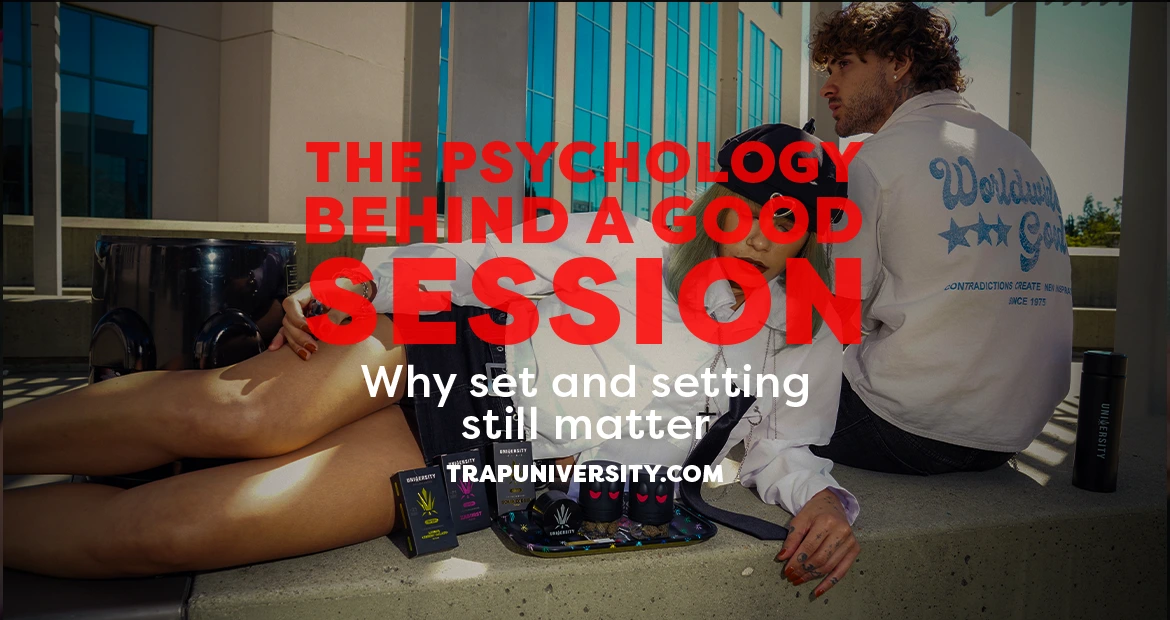
In conversations about intentional experiences, few concepts are as important as set and setting. Whether someone is exploring hemp-derived products, microdosing, or simply trying to create a relaxing environment for personal reflection, the psychological context of an experience can shape how it unfolds.
The phrase set and setting refers to two powerful factors: a person’s mindset (“set”) and the environment where the experience takes place (“setting”). Together, these elements influence mood, perception, and overall comfort.
Understanding how set and setting work can help adults approach their experiences more intentionally and responsibly.
Set vs Setting: Understanding the Difference
Although the phrase set and setting is often used as a single concept, it actually refers to two separate psychological variables that interact with each other.
Set refers to a person’s internal mindset before an experience begins. This includes emotional state, expectations, past experiences, and personal intentions.
Setting, on the other hand, refers to the external environment. This includes the location, atmosphere, social context, lighting, music, and overall comfort of the space.
When both factors are aligned—meaning a person feels emotionally prepared and the environment feels safe and comfortable—the likelihood of a positive session increases significantly.
Understanding the difference between these two elements helps explain why set and setting remain such an important concept in discussions about intentional experiences.
What Does “Set and Setting” Mean?
The concept of set and setting originated in psychological research studying altered states of consciousness. Researchers observed that the emotional mindset of a participant and the environment around them could dramatically influence the quality of an experience.
“Set” refers to the internal state of a person:
- mood
- expectations
- mental preparation
- emotional state
“Setting” refers to external conditions such as:
- physical environment
- lighting and atmosphere
- music or background sounds
- the people present
Together, these two elements create the psychological framework that shapes how a session feels.
For readers curious about how perception and consciousness are studied in scientific contexts, the Beckley Foundation’s research publications explore the neuroscience and psychology behind altered states and cognitive perception.
Why Set and Setting Became Important in Modern Psychology
The importance of set and setting began gaining recognition in the mid-20th century when psychologists started studying how environmental context influenced human perception.
Researchers discovered that identical experiences could produce dramatically different outcomes depending on a person’s mindset and surroundings.
This insight became foundational in psychological studies of perception and altered states of consciousness. Today, institutions such as the Johns Hopkins Center for Psychedelic & Consciousness Research continue exploring how mindset, expectations, and emotional preparation shape subjective experiences.
These findings reinforce a key idea: experiences are never purely chemical or physiological—they are deeply shaped by psychological context.
Why Mindset Shapes Experience
One of the most important parts of set and setting is mindset. A person’s expectations and emotional state before a session can strongly influence how the experience unfolds.
Psychologists have long recognized that expectations influence perception. In other words, what someone anticipates often shapes how they interpret sensory information and emotional responses.
Research organizations like the Johns Hopkins Center for Psychedelic & Consciousness Research study how mental preparation and emotional context influence subjective experiences.
Approaching a session with a calm, prepared mindset often leads to a more comfortable and balanced experience.
Why Environment Matters
The “setting” portion of set and setting refers to the physical and social environment where an experience occurs.
Elements that can influence setting include:
- lighting
- music
- temperature
- familiarity of the location
- people present in the environment
A quiet, comfortable environment can help people relax and focus inward, while chaotic or unfamiliar environments may create unnecessary stress.
Because of this, many individuals choose to create intentional environments for their sessions, such as a comfortable living space or a calm outdoor setting.
Creating the Ideal Set and Setting for a Session
People who prioritize set and setting often prepare their environment ahead of time.
Some common preparation strategies include:
- choosing a calm and familiar location
- minimizing external distractions
- selecting relaxing music
- preparing comfortable seating or lighting
- setting aside enough time so the session does not feel rushed
Intentional preparation can help create a sense of safety and control.
For those exploring relaxation-focused routines, understanding different consumption formats may also help create more controlled experiences. Guides like THC Oil: Benefits, Uses, and How to Use Safely explain how different formats are typically used.
Readers interested in lower-intensity approaches may also find Microdosing in the Modern Era: Why More Adults Are Choosing Low-Dose Experiences useful for thinking about preparation, intention, and pacing.
Social Context and Shared Experiences
Another important aspect of set and setting is the social environment. The people present during a session can influence how relaxed or comfortable someone feels.
Some individuals prefer solitary sessions focused on reflection, while others enjoy small gatherings with trusted friends.
The key factor is trust and comfort. Being around supportive people can significantly shape the emotional tone of an experience.
This is one reason many adults plan sessions in advance rather than treating them as purely spontaneous events.
The Role of Preparation and Intention
Preparation is often overlooked but plays an important role in set and setting.
Many experienced individuals emphasize the value of setting intentions before beginning a session. An intention might be simple, such as relaxation, creativity, or reflection.
Setting intentions can help guide the emotional direction of an experience.
Research published by the Rocky Mountain Cannabis Research Center continues to explore how expectations and behavioral context influence substance-related experiences.
Common Mistakes People Make With Set and Setting
Even when someone understands the basics of set and setting, small mistakes can still affect the overall experience.
Common examples include:
- entering a session while stressed or emotionally unsettled
- choosing a noisy or unfamiliar location
- being around people who create tension instead of comfort
- failing to think through timing, privacy, or basic needs
Many of these issues can be reduced with a little preparation. The goal is not perfection, but creating conditions that support clarity and comfort.
What Research Suggests About Context and Experience
A growing body of research suggests that context plays a major role in how people interpret and remember subjective experiences.
This is one reason psychological researchers continue to study the relationship between expectation, environment, and perception. Institutions like the Beckley Foundation and the Johns Hopkins Center for Psychedelic & Consciousness Research remain central to these conversations.
Their work reinforces an idea that applies broadly: mindset and environment can shape the meaning of an experience as much as the experience itself.
People Also Ask
What does set and setting mean?
Set and setting refers to the psychological mindset (set) and the physical environment (setting) that influence how an experience unfolds.
Why is set and setting important?
Mindset and environment can significantly influence perception, mood, and overall comfort during an experience.
How can someone improve set and setting?
People often improve set and setting by choosing a comfortable environment, preparing emotionally, and surrounding themselves with trusted individuals.
Final Thoughts
The concept of set and setting highlights an important psychological truth: experiences are shaped not only by what people consume but also by their mindset and environment.
By approaching sessions with intention, preparation, and awareness, individuals can create more balanced and positive experiences.
As conversations around intentional consumption continue evolving, understanding set and setting remains one of the most valuable tools for responsible exploration.
Disclaimer
This content is for informational purposes only and does not constitute medical or legal advice. Laws regarding hemp-derived products vary by jurisdiction. Always verify local regulations before purchasing or using such products. This content is intended for audiences 21 years and older.