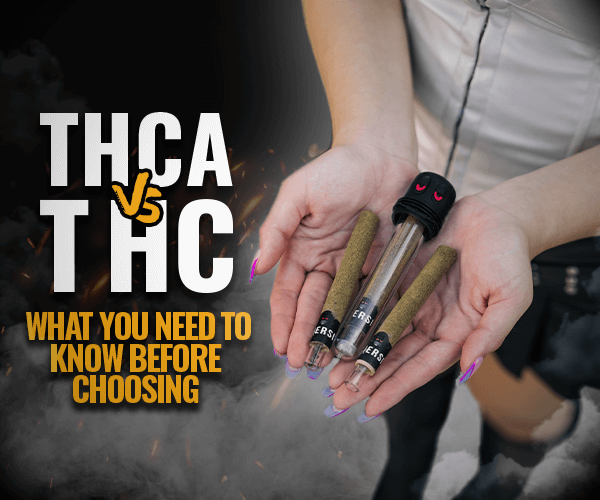
The relationship between THC and its precursor, THCA, is a topic of interest for many cannabis enthusiasts and medical users. THCA is a non-psychoactive compound that transforms into THC when exposed to heat.
The relationship between the two cannabinoids provides a foundation for understanding THCA’s medicinal uses and the compound benefits of THC. While these cannabinoids originate from the same plant, they interact differently within the human body, resulting in varying user experiences.
Understanding the differences between THCA and THC can help consumers make better choices for recreational and therapeutic cannabis products. From their chemical makeup to their effects and duration in the body, knowing how these compounds work is important for anyone considering cannabis for health or leisure.
Key Takeaways
- THCA converts to THC when heated.
- THCA and THC have different effects and uses.
- Understanding their differences guides informed choices.
Key Distinctions Between THC and THCA
There are several important differences between THC and THCA that users should know before consuming cannabinoid products. The following information will help explain their unique properties, effects, modes of use, and the legal considerations surrounding both.
Chemical Configuration and Characteristics
THCA is the chemical precursor to THC, meaning it naturally transforms into THC over time or when exposed to heat. The primary structural difference is the presence of a carboxylic acid group (COOH) in THCA, which is absent in THC.
This molecular divergence explains why THCA is non-psychoactive, while THC produces psychoactive effects known for causing euphoria. This distinction influences their properties and interactions with the body despite their similar structures.
Effects on the Human System
Both THCA and THC interact with the human body via the endocannabinoid system (ECS), which regulates numerous vital processes like sleep and mood. THC is effective in binding to CB1 receptors, leading to the psychoactive sensations commonly associated with cannabis.
THCA from raw cannabis causes benefits that result from the compound interacting less directly with cannabinoid receptors. Instead, it engages with other pathways, such as TRP channels and non-cannabinoid receptors, which may contribute to the potential health benefits of THCA without causing psychological changes.
Legal Considerations
Federal regulations surrounding THCA remain unclear, mainly due to its omission from many legal texts. The 2018 Farm Bill provided certain leniencies for minor cannabinoids, excluding hemp-derived compounds like THCA from being classified as illegal. However, states have implemented regulations outlining THCA’s commercial and personal use.
Unlike THCA, THC’s legal status is defined by a strict federal prohibition on products containing over 0.3% THC. States that have legalized cannabis impose regulations on its sale and consumption according to their legal frameworks.
Modes of Use
There are various forms of THC products, including cannabis flowers, edibles, vaporizers, and topical applications, which are often sought for recreational enjoyment due to their mind-altering properties. THCA products have become more popular due to regulatory gaps, offering items like THCA flowers, pre-rolls, and various deliverables for recreational and lifestyle uses.
THCA products, like raw cannabis flowers, are non-psychoactive. However, heating processes, such as smoking or vaping, convert THCA into THC, leading to psychoactive effects.
Transformation of THCA into THC
Decarboxylation is the process that converts THCA into THC. This transformation occurs when heat is applied, typically through methods such as vaping or burning. During the THCA decarboxylation process, the compound releases a carboxyl group and carbon dioxide (CO₂), resulting in THC.
Besides heat, time influences the THCA to THC transformation. If stored for an extended period, THCA will eventually break down into THC. The conversion rate depends on temperature and moisture levels, the condition of the plant, and surrounding humidity.
Lower temperatures result in a slower conversion process, while higher moisture content can also affect the speed and efficiency of the reaction. On average, only about 87.7% of THCA turns into THC during decarboxylation.
To put this into perspective, a cannabis strain containing 36% THCA would typically yield approximately 31.57% THC when subjected to heat. The calculation follows the industry standard conversion formula:
36 x 0.877 = 31.57
This conversion percentage demonstrates that not all THCA is transformed into THC during the process. However, the percentage calculation differs when comparing a pre-decarboxylated strain containing THC. The initial THC content remains unchanged, assuming it has undergone proper heat processing.
Smoking THCA vs. THC: Which Has a Greater Impact?
Smoking THCA flower and THC flower produces distinct outcomes due to the heat-driven transformation of THCA into THC. Fresh cannabis buds, rich in THCA, contain minimal THC until heat activates the psychoactive compound, influencing the types of effects THC has on the body. This conversion is crucial in determining the potency and psychoactive properties of cannabis products.
Cannabis maturity also affects potency. THC flowers from dispensaries are typically sourced from mature plants, which may have undergone extensive THCA-to-THC conversion, resulting in a different cannabinoid profile than younger buds. Strains with higher THCA content (often up to 40%) can yield stronger effects after decarboxylation, as approximately 87.7% of THCA converts to THC during smoking. However, high-THC flowers are less common due to legal restrictions limiting most products to 0.3% THC content.
Individual responses to THCA and THC vary based on biological and perceptual differences, with cannabinoid levels and their transformation shaping users’ experiences. Understanding THCA and THC, including their cannabinoid content and conversion dynamics, can help consumers choose products that better suit their lifestyles.
THCA vs. THC: Which Has Greater Strength?
THC has direct intoxicating properties and is recognized for its strong mood-altering properties. Depending on the consumption method, these responses can be felt quickly, generally between 15 to 90 minutes. Users frequently experience heightened sensory awareness, changes in time perception, increased hunger, and a sense of relaxation.
Decarboxylated THCA transforms into THC without altering its inherent strength. The process simply activates the compound without changing its potency level. However, because unheated THCA lacks psychoactive properties, it produces milder outcomes, such as drowsiness and subtle productivity, though these occurrences may vary among different individuals.
THCA vs. THC: Side Effects
Delta 9 THC can lead to a mixture of mental and bodily reactions. Mentally, consuming too much THC may cause anxiety and impact short-term memory. Physically, some common side effects include red eyes, dry mouth, increased heart rate, drowsiness, and increased appetite.
THCA, when heated or smoked, mirrors the side effects of THC. If ingested raw through tincture or edibles like THCA gummies, it is unlikely to produce any psychological responses, but this can differ among individuals. However, some have reported physiological impacts of raw THCA consumption, including stomach discomfort, reduced effectiveness of certain medications, and tiredness. Each individual may experience these outcomes differently depending on various factors.
THCA vs. THC: Which Remains in the Body Longer?
The persistence of THCA in the system is influenced by various factors such as dosage, frequency, and metabolic rate. When unheated and retaining its acidic form, THCA often doesn’t change into detectable metabolites like THC-COOH, so it rarely shows up in standard drug tests unless decarboxylated into THC.
If THCA does undergo decarboxylation, it follows a similar metabolic path to Delta-9-THC, converting into THC-COOH—a metabolite that drug tests target. This means the system treats decarboxylated THCA similarly to Delta-9-THC in terms of duration in the body.
Delta-9-THC naturally breaks down into THC-COOH, a fat-soluble compound with a prolonged presence in the body. The half-life of THC is lengthy, meaning it takes time for its concentration to halve. This period can vary based on individual consumption habits. Light users typically clear THC faster, often within a few days, while frequent users may require weeks to eliminate it completely.
The detection window also hinges on the sample type tested. Below is a detailed table illustrating this:
| Sample |
Period of Detection |
| Blood |
12 hours |
| Hair |
90 days |
| Saliva |
24 hours |
| Urine |
30 days |
Decarboxylated THCA, breaking down into THC-COOH, remains detectable for similar durations as Delta-9-THC across these samples. As a result, abstaining from THCA is the best choice before drug testing, given the potential for positive results.
Closing Observations: Is THCA Superior to THC?
THCA and THC each serve different purposes, making one more suitable than the other depending on individual needs. THCA offers non-psychoactive benefits, especially in its raw form, while THC is known for its psychoactive properties and recreational appeal. The choice ultimately depends on personal goals, legal factors, and preferred methods of use. Knowing how they differ helps users select the best option for their needs.
Common Questions
Can THCA Produce a High?
When exposed to heat, THCA can result in a high.
Is THCA Equivalent to THC?
Despite their close relation, THCA and THC are not the same. THCA is an initial form that eventually converts to THC.
Does THCA Include THC?
THCA transforms into THC when subjected to heat through a process known as decarboxylation.
Does All Cannabis Contain THCA?
In the early stages, cannabis contains more THCA. As the plant matures, most THCA converts into THC.
Is THCA Genuine THC, and Is It Part of Cannabis?
THCA is not artificial but a natural cannabinoid found in cannabis that changes into THC.
Does Smoking THCA Mirroring THC?
When smoked, THCA provides effects similar in potency, strength, and impact to THC.
Is THCA as Potent as THC?
THCA matches THC in strength upon heating and smoking. For a more powerful cannabinoid experience, many users turn to THCP, which is reported to be 33 times more potent than THC.
Does THCA Function Like THC?
Following decarboxylation, THCA operates like THC. Unaltered THCA does not result in a high.
Is THCA a Better Choice for Medical Use Than THC?
Both substances offer equal benefits after decarboxylation. Some users favor THCA due to its lighter regulatory status compared to Delta-9-THC.