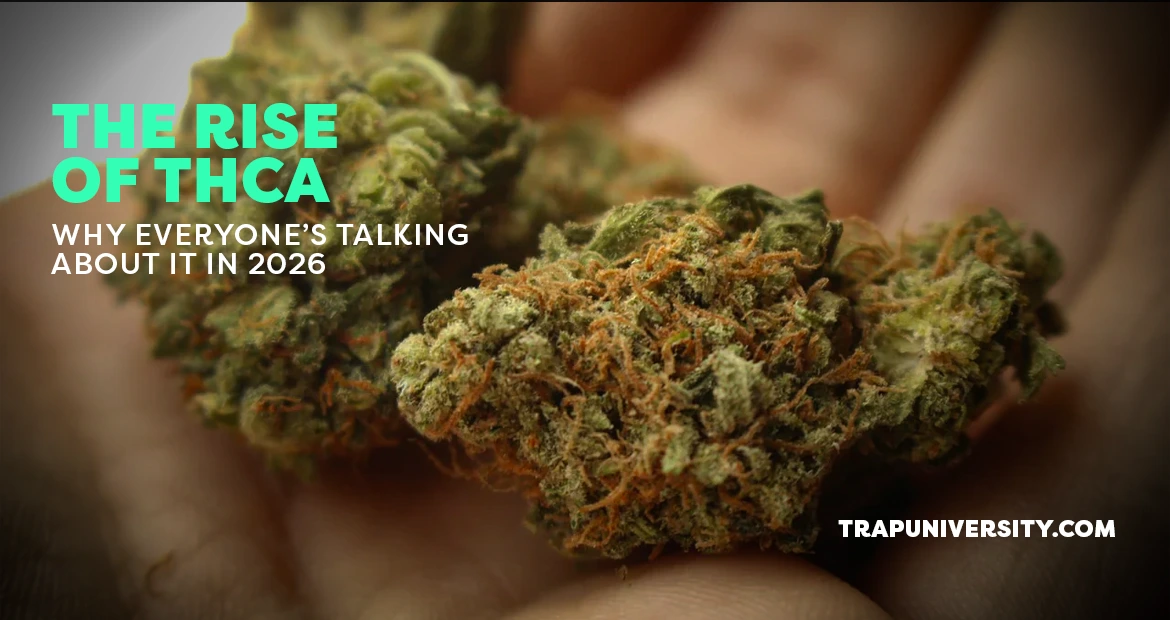
THCA (tetrahydrocannabinolic acid) is the raw, non-psychoactive form of THC found in freshly harvested cannabis. Unlike THC, it doesn’t produce a high in its natural state. THCA is present in cannabis before it undergoes heat-based activation (decarboxylation).
Key Characteristics:
Found in raw, unprocessed cannabis
Non-intoxicating in its natural state
Converts into THC when exposed to heat
Being researched for potential benefits like anti-inflammation and neuroprotection (Project CBD, 2022)
You can find THCA in freshly harvested cannabis flowers, and some cannabis tinctures and topicals designed to retain its raw form. Enthusiasts who juice raw cannabis or take cold-processed tinctures often choose THCA for its non-psychoactive properties.
How It Works in the Body: THCA doesn’t strongly bind to the CB1 receptors in the brain, which is why it doesn’t produce a high. However, it may still have therapeutic potential due to its interaction with other receptors and signaling pathways in the body. Early research and anecdotal evidence suggest it could help with:
THC (tetrahydrocannabinol) is the psychoactive cannabinoid responsible for the “high” in cannabis. It’s created when THCA is decarboxylated—through heat from smoking, vaping, or baking.
Key Characteristics:
Produces euphoric and relaxing effects
Binds to CB1 receptors in the brain
Used both recreationally and medicinally
Regulated in most U.S. states and countries
THC is widely studied and is the most well-known cannabinoid. Its effects vary based on dosage, method of consumption, and individual tolerance. According to the National Academies of Sciences, THC has shown efficacy for:
Chronic pain relief
Anti-nausea for chemotherapy patients
Appetite stimulation for those with HIV/AIDS or eating disorders
Sleep improvement for insomnia
It also plays a central role in the entourage effect when used with other cannabinoids and terpenes.
🔧 How THCA Becomes THC: The Decarboxylation Process
THCA is converted into THC through a process called decarboxylation, which involves heat exposure. This chemical reaction removes a carboxyl group, “activating” THCA into its psychoactive form.
Common Decarboxylation Methods:
🔥 Smoking: Heat activates THCA instantly when combusted
🫐 Vaping: Controlled heating transforms THCA into THC at lower temperatures
🫕 Cooking: Cannabis is decarboxylated during the baking of edibles
Even slow exposure to sunlight or heat can cause partial conversion over time. That’s why cannabis should be stored in a cool, dark place if you want to preserve THCA.
Want to elevate your experience? Browse all our categories in the Trap University Shop.
📊 THCA vs THC: Key Differences
Feature
THCA
THC
Psychoactive
❌ No
✅ Yes
Found In
Raw flower, tinctures, capsules
Smoked or heated flower, edibles
Receptor Interaction
Weak CB1/CB2 affinity
Strong CB1 activation
Potential Uses
Anti-inflammatory, neuroprotective (in research)
Pain relief, euphoria, appetite boost
Legal Status
Legal in more areas
Often regulated by state laws
While both compounds come from the same plant, their effects, legality, and applications can be quite different. For consumers who want to stay clear-headed but still explore potential wellness benefits, THCA may be ideal. For others seeking therapeutic or recreational euphoria, THC is the more traditional route.
Because THCA is non-intoxicating, it may be of interest to those exploring cannabis without the high. However, these findings are preliminary, and more clinical research is necessary to confirm any therapeutic effects.
THC Uses (Supported by Clinical Evidence): According to the National Academies of Sciences, THC shows therapeutic potential for:
Chronic pain management
Appetite stimulation (e.g. in cancer or HIV/AIDS patients)
Chemotherapy-induced nausea and vomiting
Sleep disorders such as insomnia
Several U.S. states have legalized THC-based medicines for qualifying conditions, although medical oversight and dosing standards vary.
Recreational Uses:
THCA: Rarely used recreationally due to its lack of psychoactivity
THC: Frequently used in social and recreational contexts for euphoria, creativity, and relaxation
⚠️ These statements have not been evaluated by the FDA. Effects may vary, and more research is needed.
🔒 Legal Considerations for THCA vs THC
THCA Legality:
THCA is generally not classified as a controlled substance at the federal level because it is non-psychoactive.
However, since it decarboxylates into THC when heated, some states regulate it similarly to THC.
THC Legality:
THC remains federally illegal in the U.S.
Many states allow it under medical or adult-use cannabis laws
Hemp-derived THC products (e.g., Delta-8 or compliant Delta-9) must stay below 0.3% Delta-9 THC by dry weight
While they originate from the same plant, THCA and THC offer very different experiences:
THCA is emerging in wellness spaces and is ideal for non-psychoactive use
THC remains the gold standard for pain relief, nausea reduction, and recreational effects
As science evolves, new research will help refine the understanding of each cannabinoid’s potential.
This content is for informational purposes only and does not constitute legal or medical advice. These products have not been evaluated by the FDA and are not intended to diagnose, treat, cure, or prevent any disease.
Effects may vary. Please consult a healthcare provider before using cannabis products. Content is intended for individuals 21 years and older, per U.S. law.
Over the last few years, a new compound has taken center stage in the hemp industry. Conversations among consumers, retailers, and researchers increas...
When comparing THCA prerolls vs THC prerolls, most people assume they’re basically the same thing. They look identical. They smell similar. They burn ...
You’ve probably seen Delta 9, Delta 8, THCA, THCP, and more pop up on vape carts, gummies, and labels. But if Delta 9 is THC… then what’s all this tal...
With the rise of THCA-rich products like vapes, dabs, and hemp-derived flower, many users are wondering: Does THCA show up on a drug test? The short a...
Understanding THCA vs THC: What Makes Them Different
If you have ever held a nug and wondered what makes it potent or what determines whether it is l...
In the ever-expanding world of cannabis science, two cannabinoids are generating serious buzz: THCP and THCA. Whether you’re a seasoned user or just s...
If you’re exploring premium cannabis extracts, you’ve likely come across THCA live rosin. But a common question still lingers: does THCA live rosin ge...
As cannabis science advances, more consumers are asking nuanced questions about cannabinoids. A top inquiry? THCA vs THC: which is stronger? It’s a fa...
Is THC Legal in My State? The cannabis landscape is constantly evolving, and in 2025, staying informed about THC laws in your area is more important t...